
Corporate Edge Wellness
Workplace wellbeing built by exercise professionals and tailored to your organisation. The shape of the program is a conversation, not a package off a shelf.
-
An active business service
Corporate Edge Wellness is part of what Personal Edge Fitness does, alongside the consumer practice.
-
Tailored, deliberately
Workforces differ. What participation looks like and what the program includes are designed with you rather than announced to you.
-
Delivered by exercise professionals
The same practice, the same coaching team, the same approach to education and explanation.
Who this is for
What employers usually want to solve
- A wellbeing budget exists and nobody is confident what to spend it on.
- The last initiative launched with enthusiasm and quietly stopped being mentioned.
- The people who signed up for the last one were the people who were already exercising.
- Your workforce spans desk work and physical work, twenty-somethings and people close to retirement.
- Discounted gym memberships were offered and the take-up data was embarrassing.
- Someone senior wants a number proving it worked, and you suspect the honest answer is complicated.
- You want something your people would actually use rather than something that photographs well.
What this is, and what it is not. This page is deliberately short on specifics, and that is honest rather than evasive. The current packaging of Corporate Edge — engagement length, how participation is structured, what reporting an employer receives, eligibility and pricing — is confirmed directly with us. We would rather have that conversation than publish a format you then discover does not apply.
The reasoning
Why workplace wellbeing programmes stop, and why it is almost never the people
The pattern is consistent enough to be predictable. A programme launches, attracts the employees who were already active, runs enthusiastically for a few weeks, and then attendance decays. The usual diagnosis is that people lack commitment. The usual reality is that the programme asked for a behaviour the working week does not permit, and no amount of commitment fixes a scheduling impossibility.
There is a second failure underneath it, and it is the one that makes reporting so slippery. Voluntary programmes recruit by self-selection, so the participants are the people least likely to need help and most likely to produce good numbers. The results then look excellent while the population you were actually worried about never appeared. Measuring the keen is not measuring the workforce, and a provider who does not raise that with you is either not thinking about it or would rather you did not.
The third is that general advice does not survive contact with an individual body. "Stay active" and "eat better" are not instructions, they are sentiments. Someone with a reconstructed knee, someone who has never lifted anything deliberately, and someone training for a half marathon cannot be given the same guidance, and if they are, two of the three correctly conclude it is not for them.
What follows from all three is unglamorous: a programme worth buying is designed around the actual working day, is explicit about who it is for and who it is not, and is honest about what it can and cannot evidence. That is a slower conversation than picking a package, and it is the only version we are willing to sell.
In plain English
- Participation rate
- The share of eligible employees who take part. The first number any provider will show you, and on its own it says nothing about whether the people who most needed the programme were among them.
- Self-selection
- Voluntary programmes attract the already-willing. It is the single biggest reason wellbeing results look better than the workforce's health actually is, and it is worth asking any provider how they account for it.
- Engagement versus outcome
- Engagement counts logins, sign-ups and attendance. An outcome is a change in something that matters. They are routinely reported interchangeably, and they are not the same purchase.
- Biometric screening
- Measuring markers such as blood pressure or body composition across a workforce. It raises real consent and confidentiality questions before it raises clinical ones, and those questions belong at the start rather than after.
- Aggregate reporting
- Results given as workforce totals rather than per person, so no individual is identifiable. The arrangement most employers assume they are getting. It should be written down rather than assumed.
How it works
How a conversation with us starts
-
Tell us about the organisation
Size, sites, the shape of the working day, and what you have tried before.
-
What participation could look like
Designed around your people rather than imposed on them. We will be clear about what is and is not currently available.
-
What you would get back
Discussed honestly, including the limits. We will not promise reporting or returns we cannot evidence.
-
Then a proposal that fits
Built from that conversation, with the detail confirmed rather than assumed.
The consultation
What your complimentary consultation covers
It is a conversation with an exercise-science professional about where you are starting from. You should leave with useful insight whether or not you enroll.
A conversation with an exercise-science professional
You talk through what you want to be able to do, what has made exercise difficult before, and where you are starting from.
Your history, in full
Surgeries, injuries, the thing that flares up in cold weather, the sport you played at nineteen. It all changes the program.
Anything your care team has said
Bring restrictions, therapy notes or a post-operative protocol. We work inside them, and diagnosis and treatment decisions stay with your licensed providers.
Body composition, if it is useful to your goal
Body-composition assessment is available as part of getting started. Ask the team which measures are worth taking for what you want to achieve.
Something practical to take away
You should leave with useful insight into your options, whether or not you decide to train with us.
For this program specifically
The shape of the working day, the sites involved, how many people and roughly what mix of roles, what has been tried before and how it ended, and what the person holding the budget actually wants to be able to say at the end of it.
The studios behind this program
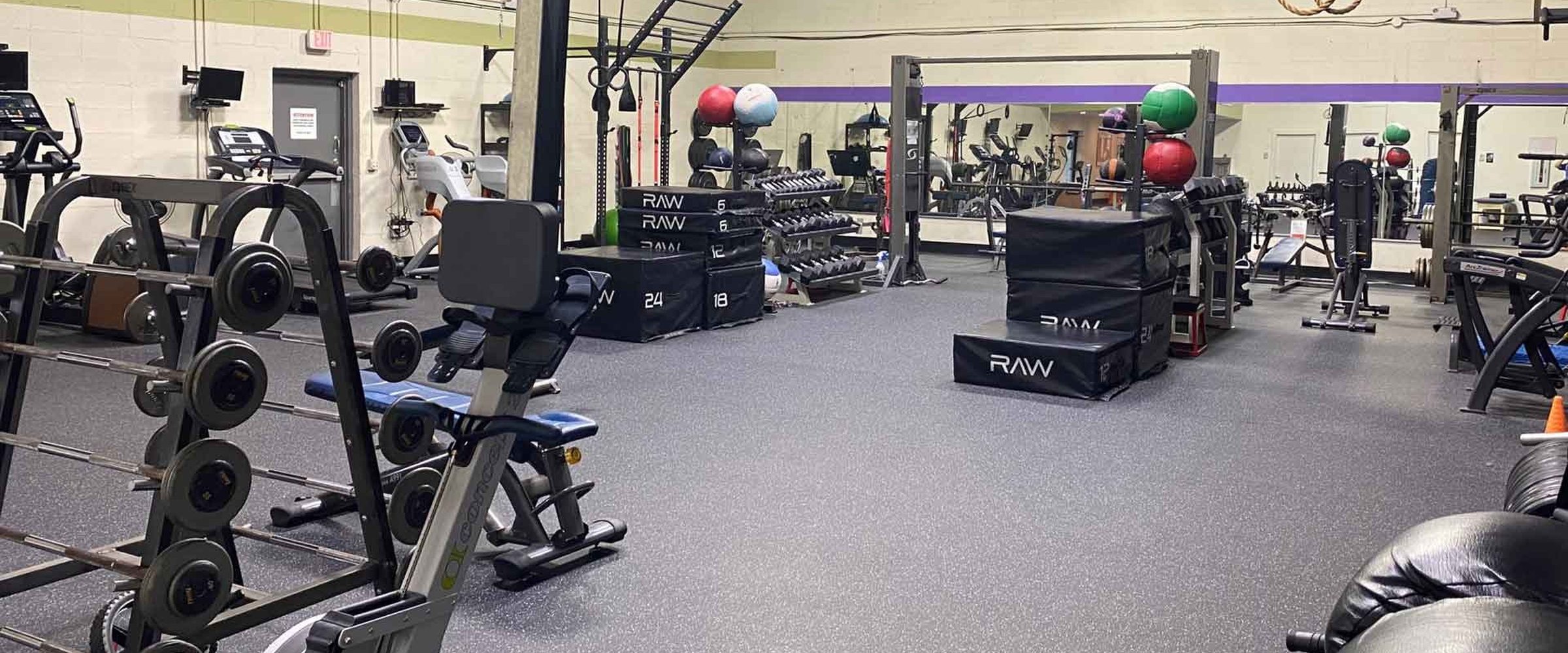
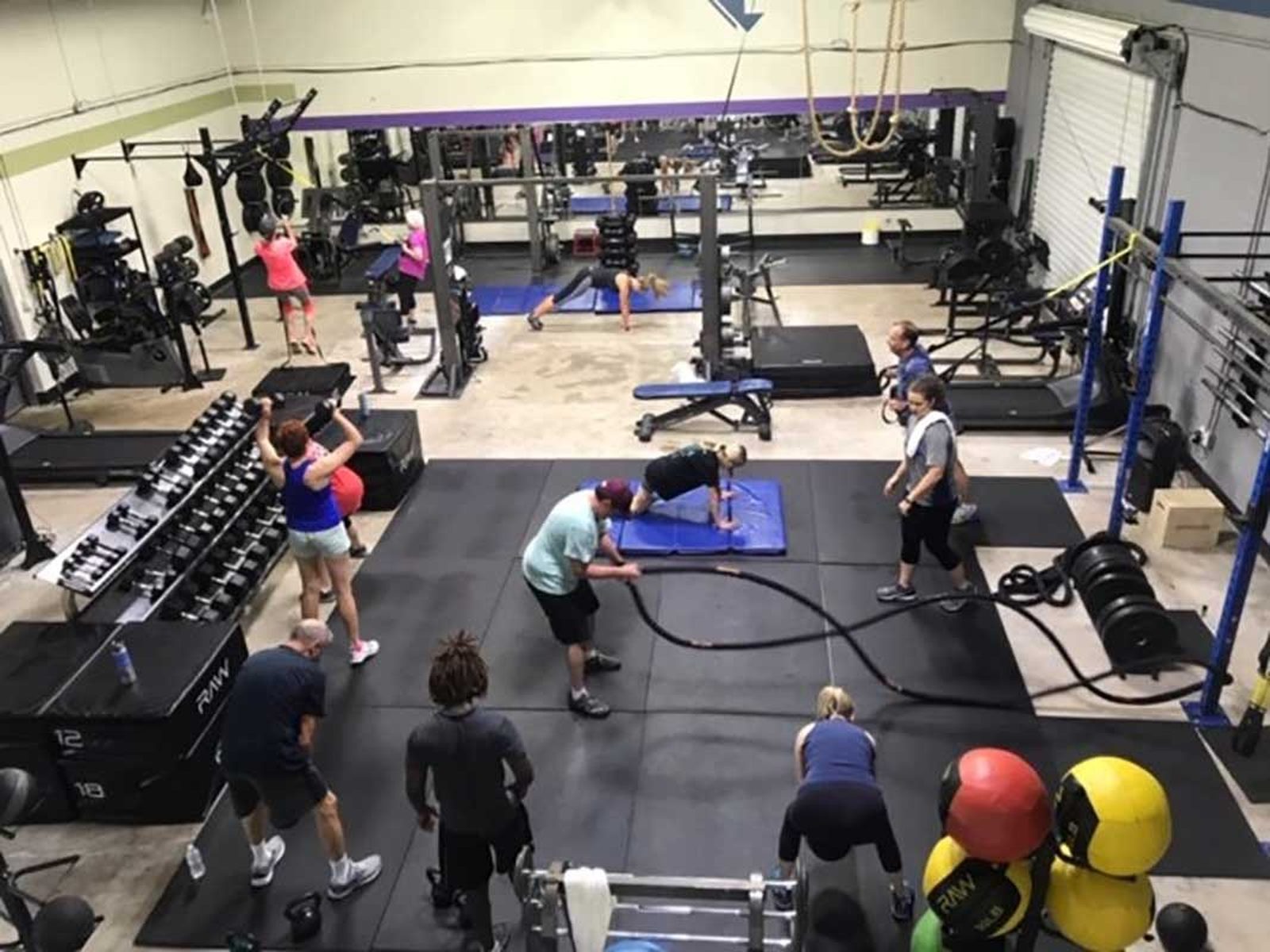
8,500
square feet indoors in Mobile
Under twenty foot ceilings, with a separate 2,400 square feet of covered outdoor area.
1,750
square feet at our Daphne studio
Personal Edge Fitness Eastern Shore, a boutique private studio. Approximate.
2
studios, in Mobile and Daphne
Serving Mobile and Baldwin counties. Mobile off the I-65 service road, Daphne on Highway 181.
Your coaching team
Who you would be working with
You work with a planned coaching team rather than being passed around at random.
A planned team, not a rota
Assignments are planned deliberately, so the people coaching you are chosen for complementary experience rather than whoever is free.
Shared notes
Your program, your history and what changed last session are written down and shared, so you are not starting the conversation again each time.
Continuity as your goals change
The same system is what lets your program keep moving when your goals, schedule or limitations change.
Exercise professionals, an intern and administration
Our practice brings all three together. Credentials are listed per person on the team page rather than claimed for the group.
Where we say no
Where we are the wrong supplier, said plainly
We are a coaching practice, not a clinical provider. We do not prescribe, we do not provide physical therapy, and we are not a dietitian service: we provide exercise and nutrition coaching and education, and anything that needs medical nutrition therapy or a diagnosis belongs with a physician or a registered dietitian. There is no current group class or bootcamp schedule, so if what you want is a recurring class timetable on your premises, that is not a thing we can currently commit to. And if the goal is a low-cost visible perk rather than changed behaviour, a negotiated gym discount will cost you far less and we would rather say so than take the budget. Where earlier Personal Edge materials describe a fixed engagement length or include outcome statistics, treat them as out of date: the current format and anything we could evidence are confirmed in conversation, not carried over from an old brochure.
Common questions
Before you get in touch
How long does a programme run?
That is confirmed with us rather than published. Earlier Personal Edge materials describe more than one format, including a fixed six-month shape, and we would rather give you the current answer than repeat an old one you then hold us to.
Does it happen at our offices or at your studios?
Ask us. Both studios are real spaces, Mobile at 8,500 square feet indoors plus a covered outdoor area and Daphne a smaller private studio, and what travel to an employer site is currently available is part of the conversation rather than something we will promise on a web page.
What size of company do you work with?
Ask us. Minimum size and eligibility are part of qualification, and there are workforces we would tell you we are not the right fit for.
Would we see individual employees' data?
Confidentiality should be agreed explicitly and in writing before anything begins, including what is reported in aggregate and what is never shared. Raise it at the first conversation. If a provider is vague about this, that is information.
Can you prove it reduces absence or increases productivity?
Not from our own data, no, and you should be suspicious of anyone who says otherwise about your particular workforce. There is a general research literature on worksite wellbeing; there is no study of your company. We will tell you what we could plausibly measure and what we could not.
Do you have case studies or testimonials from employers?
Ask what we can currently share. We will not hand you anonymous quotes or statistics we cannot stand behind, which is why this page has none.
Could Catalyst be part of it?
It is worth asking about. Catalyst is our non-medication weight-management pathway and generally runs around sixteen weeks. Whether it fits as a component for a particular workforce is a question for the conversation.
What about employees who are nervous about exercise?
They are the point. People new to training and people returning after a long gap are a core part of who the practice coaches, and a programme that only serves the already-fit is the failure described further up this page.
How do we start?
Get in touch and describe the organisation. The first step is a conversation, not a proposal.
Start with a conversation
Tell us your goal, where you are starting from and anything your care team has said. The initial consultation is complimentary, at either studio.