
Training that protects your independence
Strength, balance and mobility work for people who intend to stay in their own home, carry their own groceries, and get off the floor without help. Nothing about it is gentle for the sake of being gentle.
-
Coaching that accounts for your history
Your program accounts for bone density, joint history and medication rather than effort alone, and it is explained to you as it changes.
-
Room to work without an audience
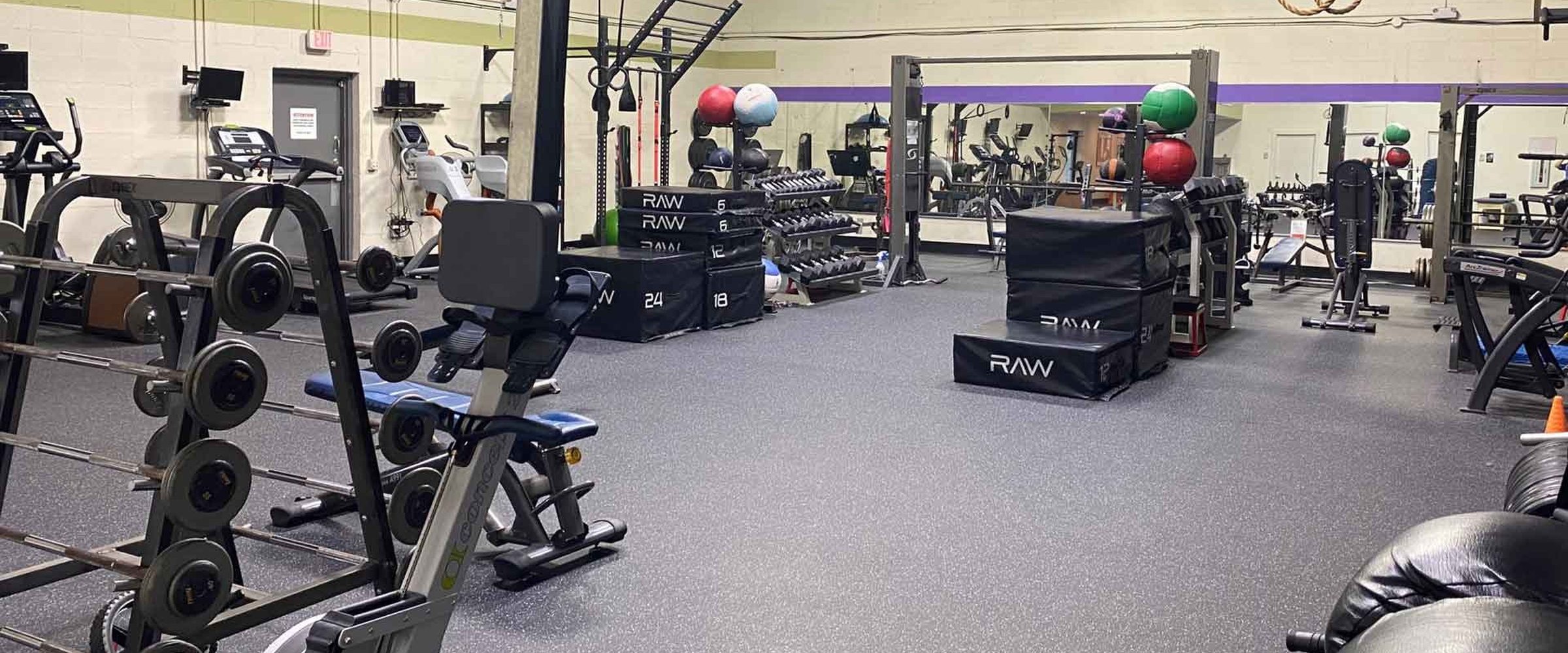
The Mobile studio has 8,500 square feet of indoor space under twenty foot ceilings, so there is room to train at your own pace.
-
Physicians refer patients here
The relationship with local doctors runs both ways. We work inside whatever restrictions you arrive with.
Who this is for
What usually brings people in
- Stairs have started to require a plan.
- You have caught yourself using your arms to get out of a chair.
- A fall, yours or someone else's, has changed how you move.
- You have been told to "stay active" without anyone defining the dose.
- Group classes move too fast, and the gym floor feels like it belongs to someone else.
- You want to keep carrying your own shopping for another twenty years.
The reasoning
Strength is the thing that keeps independence, and it is trainable at any age
Two separate things decline with age and they are usually confused with one another. Muscle mass falls gradually. Muscle power, the ability to produce force quickly, falls faster and earlier, and power is what catches you when a curb arrives sooner than expected.
This matters because the two respond to different training. Slow, light, high-repetition work maintains a little mass and almost no power. Restoring power requires intent: loading that is meaningful for you, and movements performed with the intention of moving quickly even when the actual speed is modest. That is not more dangerous than the alternative. The alternative is a body that cannot arrest a stumble.
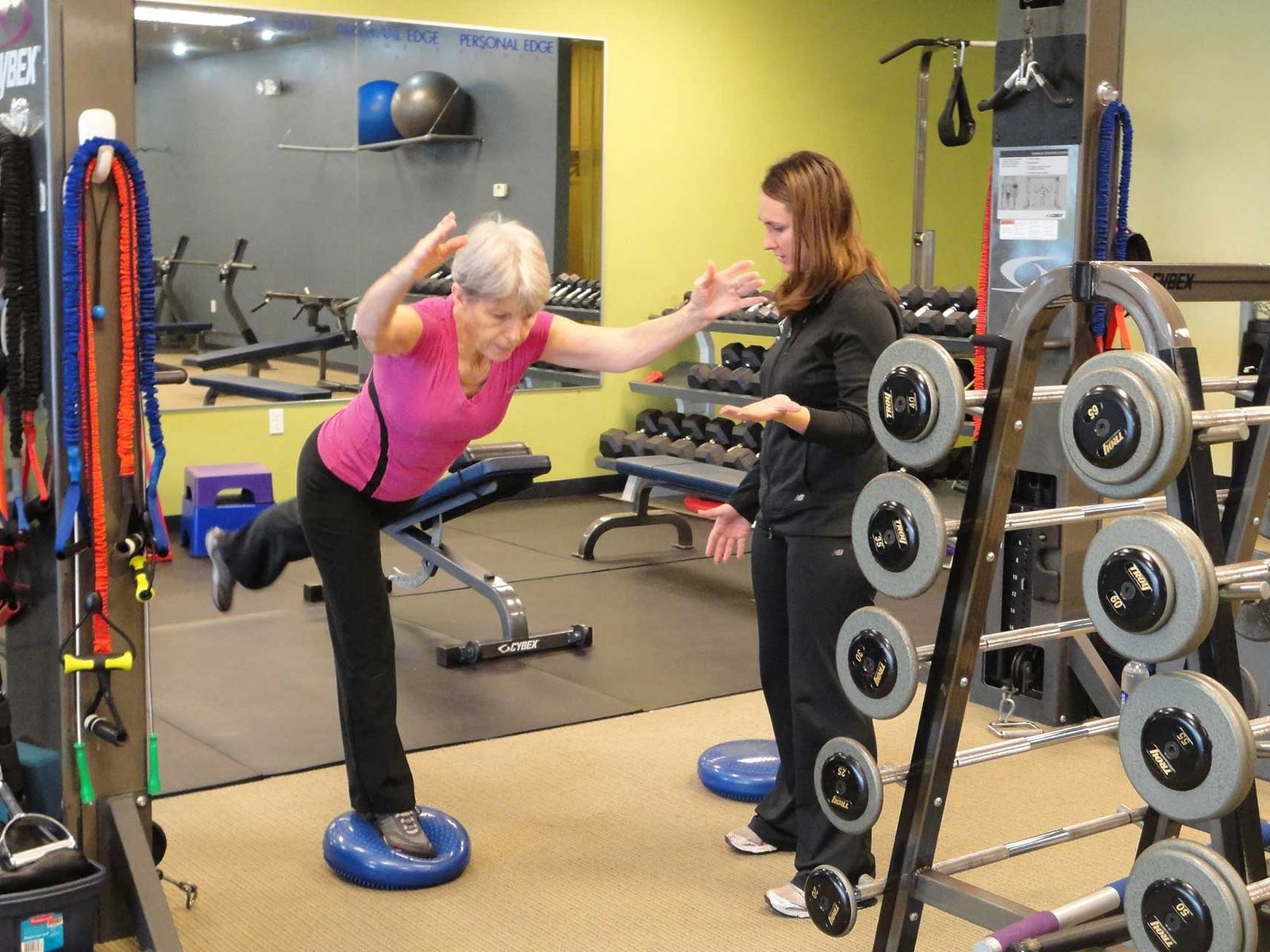
The other half of the work is balance, which is a skill rather than a trait, and skills degrade when unpractised and return when trained. Standing on one leg is not a party trick. It is a rehearsal for every moment between one footstep and the next.
None of this requires a punishing session. It requires a correctly chosen one, which is the part that needs somebody who studied this.
In plain English
- Sarcopenia
- The age-related loss of muscle mass. Gradual, well documented, and substantially slowed by resistance training.
- Power
- Force produced quickly, as opposed to force produced eventually. What you need to catch yourself, and the first quality to go.
- Proprioception
- Your sense of where your limbs are without looking. It is trainable, and training it is most of what balance work actually is.
- Functional capacity
- Whether you can do the things your life requires: stairs, shopping, getting off the floor. The only measure that matters here.
Balance, core and flexibility
Balance and core work, as part of the program
An active part of what we coach, and a section rather than a separate program.
Balance is trainable. It is not a fixed attribute you either still have or do not, and treating it as one is how people end up avoiding the activities that would actually maintain it.
In practice balance, core strength and flexibility are programming areas rather than a class you attend. They get built into your sessions in the proportion your goals and your starting point call for, alongside the strength work, because they are what make strength usable: getting out of a low chair, carrying something up stairs, turning quickly without thinking about it.
What we will not do is promise that training prevents falls, eliminates pain or reverses a condition. What we will do is explain what the work is for and adapt it as you progress.
Balance
Trained deliberately rather than hoped for, and progressed as your confidence grows.
Core strength
The middle of the body doing its job, so the rest of the movement has something to work against.
Flexibility and range
Enough range to do what you want to do, worked on where it is actually missing.
Why it sits inside the program
These are programming areas, not a product. They are proportioned to your goals rather than sold separately.
How it works
What the work involves
-
A real conversation first
What you want to be able to do, what has made training difficult before, and where you are starting from. Ask us what is assessed and how progress gets reviewed.
-
Load, because bone responds to load
Resistance training is the intervention with the strongest evidence behind it. It is done at a weight that is right for you, which is usually more than people expect.
-
Balance trained on purpose
Not as a warm-up afterthought. Falls are the thing we are actually working against.
-
Progress you can feel outside the gym
The measure is whether the stairs got easier, not whether you were tired afterwards.
The consultation
What your complimentary consultation covers
It is a conversation with an exercise-science professional about where you are starting from. You should leave with useful insight whether or not you enroll.
A conversation with an exercise-science professional
You talk through what you want to be able to do, what has made exercise difficult before, and where you are starting from.
Your history, in full
Surgeries, injuries, the thing that flares up in cold weather, the sport you played at nineteen. It all changes the program.
Anything your care team has said
Bring restrictions, therapy notes or a post-operative protocol. We work inside them, and diagnosis and treatment decisions stay with your licensed providers.
Body composition, if it is useful to your goal
Body-composition assessment is available as part of getting started. Ask the team which measures are worth taking for what you want to achieve.
Something practical to take away
You should leave with useful insight into your options, whether or not you decide to train with us.
For this program specifically
Anything a physician has said about your heart, your blood pressure, your bones or your joints. Also: what you have stopped doing recently, and whether you stopped by choice.
The studios behind this program
8,500
square feet indoors in Mobile
Under twenty foot ceilings, with a separate 2,400 square feet of covered outdoor area.
1,750
square feet at our Daphne studio
Personal Edge Fitness Eastern Shore, a boutique private studio. Approximate.
2
studios, in Mobile and Daphne
Serving Mobile and Baldwin counties. Mobile off the I-65 service road, Daphne on Highway 181.
Your coaching team
Who you would be working with
You work with a planned coaching team rather than being passed around at random.
A planned team, not a rota
Assignments are planned deliberately, so the people coaching you are chosen for complementary experience rather than whoever is free.
Shared notes
Your program, your history and what changed last session are written down and shared, so you are not starting the conversation again each time.
Continuity as your goals change
The same system is what lets your program keep moving when your goals, schedule or limitations change.
Exercise professionals, an intern and administration
Our practice brings all three together. Credentials are listed per person on the team page rather than claimed for the group.
My patients who have worked with the professional staff at Personal Edge Fitness have experienced an enhanced quality of life.
Where we say no
Where we would tell you to see a physician first
Unexplained dizziness, chest pain on exertion, a fall you cannot account for, or a recent change in medication that affects blood pressure are all reasons to see a doctor before you see us. We are not being cautious for the sake of it: training around an undiagnosed cause is how a manageable problem becomes an injury. If any of that is in play, we will say so at the consultation.
Common questions
Before you get in touch
Am I too old to start?
No. Resistance training produces measurable strength gains in people well into their nineties. Starting later changes the starting load, not whether it works.
Will I be training alongside twenty-year-olds?
The Mobile studio has 8,500 square feet of indoor space, so there is room to train at your own pace. Tell us what environment you would be comfortable in and we will talk through the options.
I have arthritis. Can I still do this?
Usually, yes, and often it helps. But the program has to be written around which joints are affected and how they behave on a given day. Bring what your physician has told you.
What if I have never lifted anything in my life?
Then we start with your own body weight and a chair, and the first sessions are mostly teaching. Nobody is going to hand you a barbell in week one.
Is this a class or one-on-one?
Coaching here is individualized. We do not currently run a regular group class or bootcamp schedule, so your program is written for you rather than for a room.
How often would I need to come?
That depends on your goal, your schedule and your starting point, so it is part of what the consultation works out rather than a fixed package.
My doctor told me to exercise but not what to do. Is that enough to start?
Yes, and it is one of the most common reasons people arrive here. Bring the instruction as written and we will turn it into something specific.
Start with a conversation
Tell us your goal, where you are starting from and anything your care team has said. The initial consultation is complimentary, at either studio.