
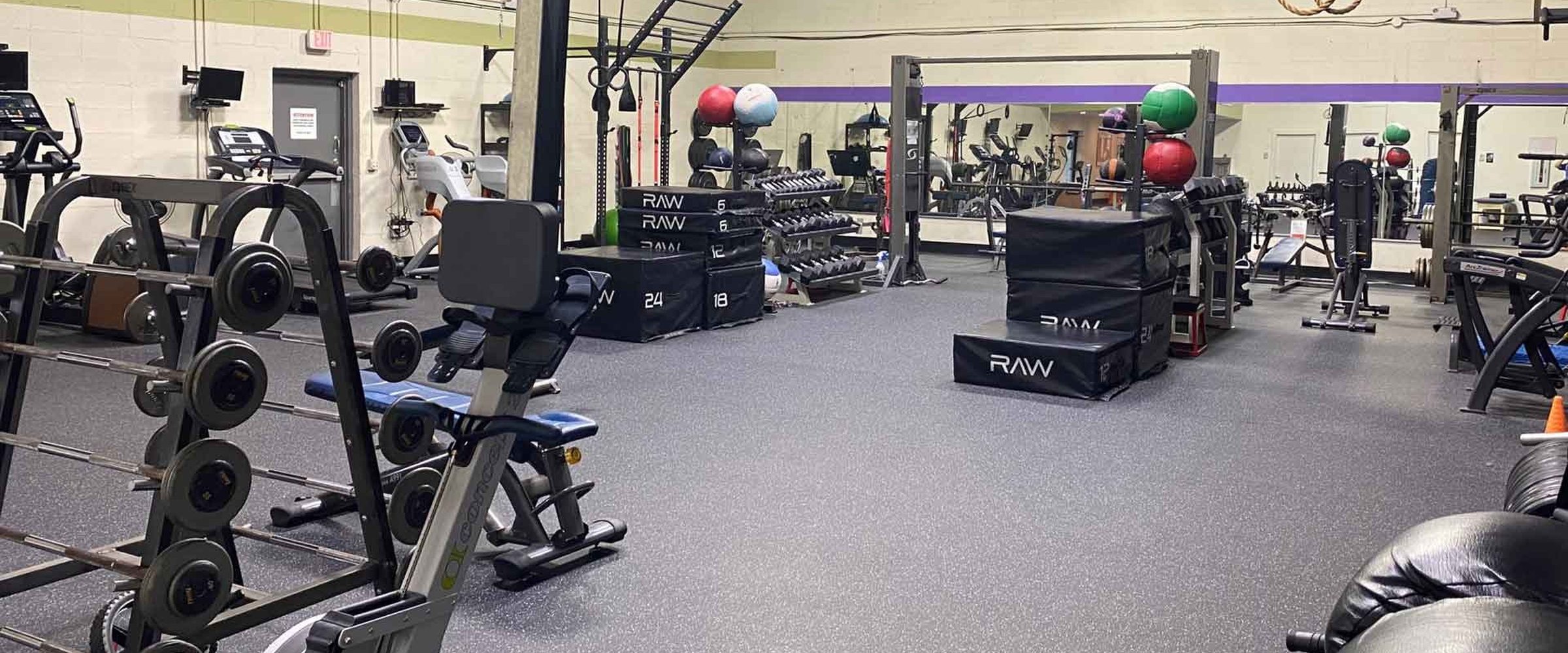
Before surgery, and after rehabilitation
Conditioning before an operation, and training after physical rehabilitation has finished, with appropriate clinical clearance. Our role is fitness coaching; diagnosis and treatment stay with your providers.
-
A certified athletic trainer on staff
Gary Zakutney holds a BS in Sports Medicine and an ATC certification, and spent years as an athletic trainer before joining in 2008.
-
We work alongside your clinicians
Coaching here begins where medically directed care leaves off, with appropriate clinical clearance, and we build inside the restrictions you arrive with.
-
A coordinated coaching team
Planned assignments and shared notes, so the person coaching you knows your history and your restrictions without being told again.
Who this is for
This is usually the point people arrive at
- Physical therapy ended, and the exercises stopped with it.
- You were cleared to train again, with no guidance on what that means.
- The injured side has been protected so long it is now the weaker side.
- You are afraid of doing the thing that hurt you in the first place.
- A commercial gym gave you a program that ignores the injury entirely.
- You have been told to "listen to your body" by people who never explained what to listen for.
What this is, and what it is not. Personal Edge provides post-rehabilitation fitness training. We are not a physical therapy practice, and we do not diagnose or treat injuries. Most clients come to us after a course of physical therapy, or alongside one, with their physician in the loop.
The reasoning
Why the weaker side stays weaker without someone watching
After an injury the body does something sensible in the short term and expensive in the long term: it hands the work to whatever still functions. Load shifts to the other leg, the other shoulder, the lower back. The movement still happens, so it looks like recovery, and the compensation quietly becomes the new default.
That is why the injured side can stay measurably weaker long after the pain has gone and the clearance has been signed. Nothing in ordinary training forces it to catch up. A bilateral movement, such as a normal squat or a normal press, lets the strong side carry the weak one, which means the gap can persist for years inside a program that appears to be working.
Closing it takes unilateral work, loaded deliberately, watched by someone who can see the compensation as it happens rather than reading it off a spreadsheet afterwards. That is the whole argument for supervision at this stage, and it is the reason this program is not simply a list of exercises we could email you.
In plain English
- Compensation
- Another muscle or another side quietly doing the job of the one that is not ready. It makes the movement possible and the weakness invisible.
- Unilateral work
- One limb at a time. A split squat instead of a squat. It removes the strong side's ability to cover for the weak one.
- Range of motion
- How far a joint actually travels before something stops it. Often the first thing lost after surgery and the last thing regained.
- Progressive overload
- Adding a little more work than the body is currently comfortable with, on a schedule. The mechanism behind every real strength gain, and the thing that has to be rationed carefully here.
How it works
How the work actually runs
-
We start with a conversation
Your injury history, and what your physician or physical therapist has already told you. The consultation is complimentary, at either studio.
-
The program is built around the restriction
Not around what a program is supposed to look like. If one shoulder will not go overhead yet, we train everything else while we work on that.
-
You learn why each thing is there
Which is what makes people keep doing it once the supervised sessions end.
-
It changes as you do
Range comes back, load goes up, and the program stops looking like rehabilitation and starts looking like training.
The consultation
What your complimentary consultation covers
It is a conversation with an exercise-science professional about where you are starting from. You should leave with useful insight whether or not you enroll.
A conversation with an exercise-science professional
You talk through what you want to be able to do, what has made exercise difficult before, and where you are starting from.
Your history, in full
Surgeries, injuries, the thing that flares up in cold weather, the sport you played at nineteen. It all changes the program.
Anything your care team has said
Bring restrictions, therapy notes or a post-operative protocol. We work inside them, and diagnosis and treatment decisions stay with your licensed providers.
Body composition, if it is useful to your goal
Body-composition assessment is available as part of getting started. Ask the team which measures are worth taking for what you want to achieve.
Something practical to take away
You should leave with useful insight into your options, whether or not you decide to train with us.
For this program specifically
Whatever your surgeon or physical therapist has written down. Protocols, restrictions, dates. If you do not have them, tell us who to ask.
The studios behind this program
8,500
square feet indoors in Mobile
Under twenty foot ceilings, with a separate 2,400 square feet of covered outdoor area.
1,750
square feet at our Daphne studio
Personal Edge Fitness Eastern Shore, a boutique private studio. Approximate.
2
studios, in Mobile and Daphne
Serving Mobile and Baldwin counties. Mobile off the I-65 service road, Daphne on Highway 181.
Your coaching team
Who you would be working with
You work with a planned coaching team rather than being passed around at random.
A planned team, not a rota
Assignments are planned deliberately, so the people coaching you are chosen for complementary experience rather than whoever is free.
Shared notes
Your program, your history and what changed last session are written down and shared, so you are not starting the conversation again each time.
Continuity as your goals change
The same system is what lets your program keep moving when your goals, schedule or limitations change.
Exercise professionals, an intern and administration
Our practice brings all three together. Credentials are listed per person on the team page rather than claimed for the group.
My patients who have worked with the professional staff at Personal Edge Fitness have experienced an enhanced quality of life.
Where we say no
Where we would tell you to come back later
If you are still in acute pain, still inside a post-operative protocol that forbids loading, or have not been cleared, the honest answer is that this is not the right next step yet, and you will hear that at the consultation rather than after you have paid for sessions. Personal Edge provides post-rehabilitation fitness training. Diagnosis and treatment belong to your physician and your physical therapist, and we would rather send you back to them than work around them.
Common questions
Before you get in touch
Do I need a referral to train here?
No. Anyone can request a consultation. That said, if you are working with a physician or physical therapist, tell us at the consultation, and bring whatever restrictions they have given you.
Can you work with my physical therapist?
Yes, and it works better when we do. Share your therapist's notes and restrictions at the consultation and the program will be built inside them.
What if I am still in pain?
Then the honest answer is that we may not be the right next step yet, and we will say so. Pain is a question for your physician first.
Is this the same as physical therapy?
No. Physical therapy is medical treatment delivered by a licensed therapist. What we do is fitness training, designed for a body that is coming back from something.
How long before I am training normally again?
That depends on the injury, the surgery, how long you were immobilized and what you did during that time. That is why nobody honest will give you a number before the consultation. What we will tell you at the consultation is what the first few weeks look like and what would have to change for the program to progress.
Will you make the injury worse?
The program is built around the restriction rather than through it. Load goes on what is ready and stays off what is not, and we work inside whatever clearance and restrictions your clinicians have given you.
What if my restrictions change halfway through?
Tell us and the program changes that session. This is the ordinary case, not an exception: clearance usually arrives in stages, and the program is written expecting that.
Start with a conversation
Tell us your goal, where you are starting from and anything your care team has said. The initial consultation is complimentary, at either studio.